
Hours: Mon - Fri: 9.00 AM - 6.00 PM
Here to know about this project

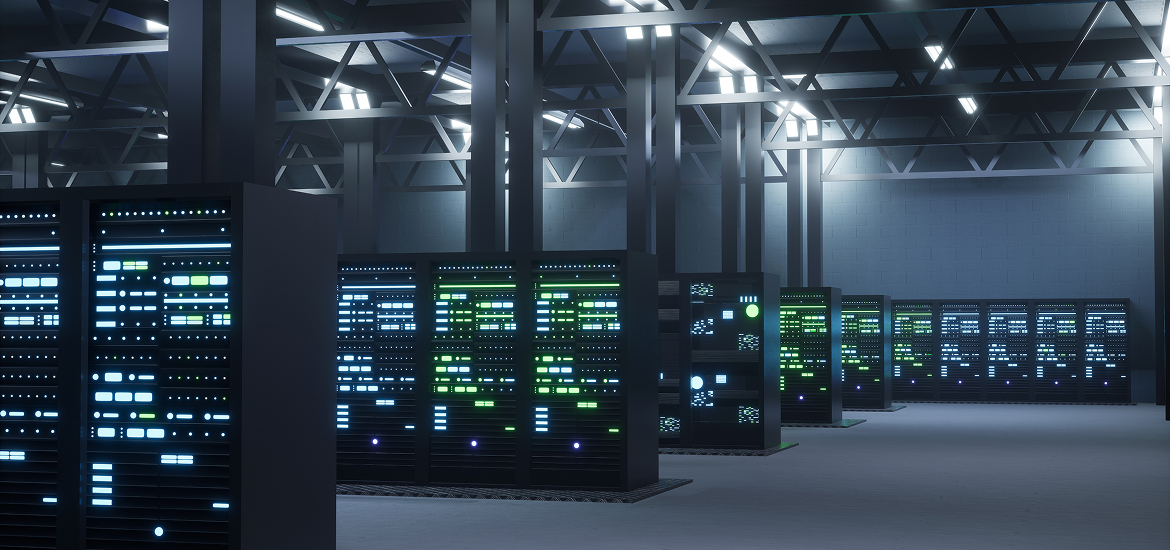
Designed and deployed a high-density AI infrastructure environment supporting 1,000+ GPUs for large-scale AI training, inference, and compute-intensive workloads. The solution was engineered to deliver high performance, reliability, and efficient operation under extreme compute density.

Infrastructure Solution

Developed the complete power and cooling architecture required for high-density GPU racks. Integrated advanced liquid cooling, resilient power distribution, high-speed InfiniBand networking, storage connectivity, and AI framework infrastructure into a unified environment.

Performance & Reliability

The infrastructure was optimized for low-latency GPU communication, thermal stability, and continuous operation. Real-time monitoring and proactive infrastructure management helped achieve a 99.98% uptime SLA while maintaining consistent workload performance.

Key Highlights

  • 1,000+ GPU high-density deployment
  • Advanced liquid cooling infrastructure
  • High-speed InfiniBand network fabric
  • Resilient power and thermal architecture
  • 99.98% uptime SLA
  • Continuous monitoring and performance optimization
  • Ongoing infrastructure management and lifecycle support
Modular AI Data Center — Enterprise AI Platform

Designed a modular enterprise AI data center that enables organizations to deploy AI infrastructure in phases and expand capacity as workload requirements increase. The architecture provides a flexible foundation for AI training, inference, analytics, and other high-performance computing workloads.

Scalable Architecture

Implemented a modular infrastructure approach covering compute, storage, networking, power, and cooling. Additional capacity can be introduced progressively, helping the organization scale its AI environment without requiring major changes to the core infrastructure.

Hybrid Cloud Integration

Integrated secure hybrid cloud connectivity to enable workloads and data to move between on-premise AI infrastructure and cloud environments. This provides greater flexibility for workload distribution, resource utilization, and future AI platform expansion.

Monitoring & Energy Optimization

Centralized monitoring provides visibility across infrastructure health, resource utilization, power consumption, and thermal performance. Energy optimization capabilities help improve operational efficiency while maintaining the performance required by demanding AI workloads.

Key Highlights

  • Modular and phased deployment architecture
  • Enterprise AI and HPC workload readiness
  • Hybrid cloud connectivity
  • Scalable compute, network, and storage capacity
  • Centralized infrastructure monitoring
  • Expansion-ready architecture
  • Ongoing management and lifecycle support